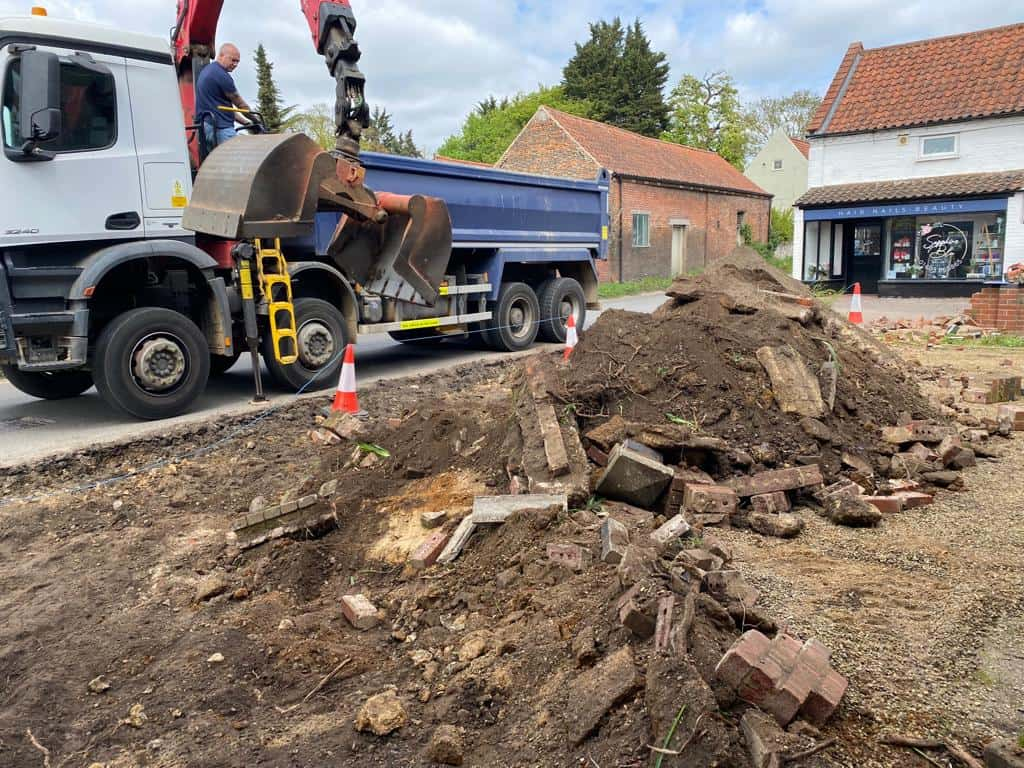
Is It Time to Repair, Extend or Replace Your Block Paving Driveway?
Block paving is valued for its durability, appearance and flexibility. Individual blocks can often be lifted and reinstated, allowing many localised problems to be corrected without rebuilding the entire driveway. However, repair is not always the right answer. An extension may be needed when the existing layout no longer provides enough usable space, while widespread deterioration can make replacement the more dependable option.
For homeowners in Haverhill, Suffolk, the decision should be based on the condition of the paving, its underlying construction and how well the current layout meets the household’s needs.
How to Choose the Right Block Paving Solution
When Is a Localised Repair Appropriate?
Repair is usually suitable when damage is confined to a clearly defined section and the rest of the driveway remains stable. Common repairable problems include:
- A small area of sunken or uneven blocks
- Isolated movement around drainage points
- Loose edge blocks
- Damaged or heavily stained individual pavers
- Localised loss of jointing material
- Minor disruption following underground work
The affected blocks can often be lifted so that the bedding layer and underlying cause can be examined. Once the area has been corrected and properly prepared, suitable blocks can be reinstated and jointed.
A successful repair must address why the paving moved. Simply adding sand beneath sunken blocks may produce only a temporary improvement if the sub-base is weak, water is collecting below the surface or the edge restraints have failed.
Signs That Repair May Not Be Enough
Repeated movement often indicates a problem beneath the visible paving. If several areas are sinking, spreading or becoming uneven, continually lifting individual sections may not provide a lasting result.
Broader warning signs include:
- Widespread settlement across the driveway
- Deep wheel tracks or recurring depressions
- Movement affecting several unrelated areas
- Poor drainage or persistent standing water
- Extensive gaps between blocks
- Failing edges around much of the driveway
- Numerous previous repairs with inconsistent levels
These symptoms may suggest inadequate ground preparation, insufficient compaction or deterioration within the supporting layers. In such cases, a more comprehensive assessment is required.
When Does Extending a Driveway Make Sense?
A block paving extension may be appropriate when the existing driveway remains sound but no longer provides enough room. Household parking requirements can change, and a narrow or awkward layout may make access unnecessarily difficult.
An extension can create:
- Additional parking space
- Easier vehicle movement
- More convenient access to the property
- A wider entrance
- A clearer separation between vehicles and pedestrian routes
The new section should be planned as part of the existing driveway rather than treated as an unrelated patch. Ground preparation, levels, drainage, edge restraints and block selection all need careful consideration.
Can New Paving Match the Existing Blocks?
Creating a consistent appearance is possible, but exact matching is not always straightforward. Existing blocks naturally change colour through weathering, traffic and general use. Even the same block type may appear slightly different when newly installed.
A professional contractor can assess the original colour, size, texture and laying pattern before recommending a suitable approach. In some cases, carefully redistributing existing blocks between the old and new sections can make the transition less noticeable. Contrasting borders can also turn a necessary join into an intentional design feature.
When Is Complete Replacement More Suitable?
Replacement may be the better option when deterioration affects most of the paved area or the underlying construction is no longer dependable. It allows the blocks and supporting layers to be removed so that the driveway can be rebuilt correctly from the ground upwards.
Complete replacement may be appropriate when:
- The surface has widespread settlement
- The sub-base is inadequate or unstable
- Drainage problems affect large sections
- The layout no longer suits the property
- Edges and restraints have failed extensively
- Repairs repeatedly move or sink again
- The paving has become severely uneven
Replacement also provides an opportunity to improve the driveway’s shape, levels, drainage and overall appearance as one coordinated project.
Why the Sub-Base Is Central to the Decision
The visible blocks are only the upper layer of a block paved driveway. Their long-term stability depends on the prepared ground, compacted sub-base, laying course and secure edge restraints below.
If these elements remain sound, repairing or extending the surface may be practical. If they have failed across a wide area, retaining them beneath new or relaid blocks could allow the same problems to return. Assessing the foundation is therefore essential before deciding how much work is required.
Drainage Should Be Considered Before Work Begins
Standing water can contribute to staining, joint deterioration and movement within the surface. It may result from incorrect falls, settlement or restricted drainage routes.
Whether the driveway is being repaired, extended or replaced, water must be directed effectively across and away from the paved area. Extending a driveway without reviewing the levels can alter how water moves, so drainage should form part of the design from the outset.
Why a Professional Assessment Adds Value
The surface alone does not always reveal the extent of the problem. A professional assessment considers movement patterns, levels, drainage, edge restraints and the condition of the underlying construction.
This helps distinguish a small repair from a more widespread failure. It also ensures that an extension integrates properly with the existing driveway and that replacement is recommended only when the condition genuinely justifies it.
Conclusion
Repair is often suitable for isolated block movement or localised damage, while an extension can improve a stable driveway that no longer offers enough usable space. Replacement becomes more appropriate when settlement, drainage problems or sub-base failure affect much of the surface.
The right decision depends on identifying the underlying cause and considering how the driveway needs to function in the future. If your block paving in Haverhill, Suffolk, requires attention, contact Haverhill Driveways to arrange a professional assessment and discuss the most suitable solution.
Call us on: 01440 840 590
Click here to find out more about Haverhill Driveways
Click here to complete our contact form and see how we can help with your driveway needs.