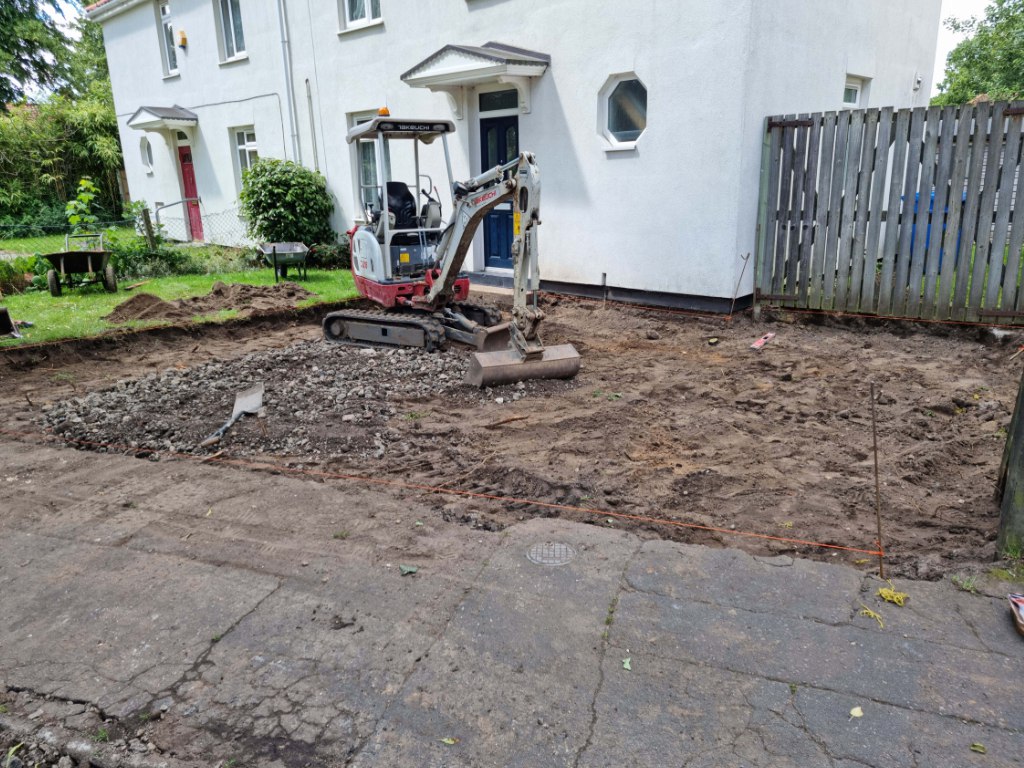
What Are the Benefits of Rebuilding a Failed Tarmac Driveway?
Tarmac is a dependable material for residential driveways, but its performance depends heavily on the ground beneath it. When a driveway develops widespread cracking, sinking or repeated potholes, the visible surface may not be the only part that has failed.
Localised repairs can resolve isolated defects. However, where deterioration affects several areas or keeps returning, rebuilding the driveway may provide a more reliable result. This allows the underlying causes to be corrected before a new tarmac surface is installed.
The Main Benefits of Rebuilding a Failed Tarmac Driveway
Underlying Weaknesses Can Be Corrected
A tarmac driveway relies on a stable, well-compacted sub-base. If this foundation is too shallow, poorly compacted or weakened by water, the surface above may move under regular vehicle use.
Patching the visible damage does not strengthen an unstable base. Rebuilding allows unsuitable materials to be removed and the foundation reconstructed correctly. This creates consistent support across the complete driveway rather than leaving weak sections beneath new repairs.
Recurring Cracks and Potholes Can Be Addressed Properly
Cracks and potholes often return when repairs treat only the surface. Movement beneath the tarmac, poor drainage or failing edges may continue to place pressure on the repaired area.
A rebuild provides an opportunity to investigate why the defects developed. Correcting the cause before installing new tarmac reduces the likelihood of the same damage quickly reappearing.
Signs that a driveway may need more than localised repairs include:
- Cracking across several areas
- Multiple potholes or crumbling patches
- Depressions beneath vehicle wheels
- Loose material around the edges
- Water collecting in low points
- Previous repairs breaking away
- Uneven sections affecting access
- Movement across a large part of the surface
A professional assessment can determine whether these problems are confined to the surface or extend into the base.
Drainage Can Be Improved
Standing water is a frequent contributor to driveway deterioration. If the surface does not have suitable falls, rainwater can collect in depressions or soak into cracks and edges.
During a rebuild, the driveway levels can be reviewed and adjusted to encourage water to move towards the intended drainage points. This helps prevent persistent puddles and reduces the amount of moisture reaching the supporting layers.
Effective drainage is not an optional finishing detail. It is an important part of protecting the structure and maintaining a usable surface.
The Driveway Can Be Re-Levelled
Sinking and settlement can leave a driveway uncomfortable to drive over and awkward to walk across. Uneven areas may also hold water and place additional strain on adjoining sections.
Rebuilding allows the levels to be restored from the foundation upwards. High points can be reduced, low sections can be reconstructed and suitable falls can be created across the surface.
The result is a smoother, more consistent driveway that provides easier access to the property.
Edges Can Be Strengthened
Driveway edges are vulnerable when they lack adequate support. Repeated vehicle movement near the perimeter may cause tarmac to crack, spread or crumble.
A full rebuild allows edge restraints and adjoining levels to be considered as part of the overall installation. Properly supported edges help contain the tarmac and preserve the intended shape of the driveway.
This is especially important at entrances, turning areas and other locations where vehicle tyres frequently pass close to the edge.
The Surface Can Be Designed for Its Actual Use
Not every driveway experiences the same demands. The number of vehicles, their typical position and the way they enter or turn all influence how the surface should be constructed.
Rebuilding provides an opportunity to assess these usage patterns. The depth and preparation of the supporting layers can then be suited to the expected traffic rather than simply covering the existing surface.
This considered approach is particularly valuable where wheel tracks or turning points have repeatedly deteriorated.
Patchwork Repairs Are Removed
Several rounds of repair can leave a driveway with different textures, levels and stages of wear. Even when individual patches remain intact, the overall surface may appear inconsistent and continue to fail around their edges.
Rebuilding removes the deteriorated material and creates a uniform installation. A continuous tarmac surface provides consistent performance while giving the entrance to the property a cleaner, more orderly appearance.
Future Maintenance Becomes More Manageable
A properly rebuilt driveway should begin with a sound foundation, suitable drainage, secure edges and a consistent surface. This makes routine maintenance more straightforward because attention can focus on keeping the driveway clear and responding promptly to isolated wear.
It also removes the uncertainty created by hidden weaknesses and numerous earlier repairs. Any future defect can be assessed against a known, properly prepared structure.
When Might a Repair Still Be Suitable?
Not every damaged tarmac driveway requires rebuilding. A repair may remain appropriate when cracking or surface damage is confined to one small area and the surrounding driveway is stable.
Resurfacing may also be considered when the existing base remains sound but the upper layer has become worn. The most suitable option depends on the extent of the deterioration, the condition of the foundation and the cause of the damage.
At Haverhill Driveways, we assess the entire surface before recommending repair, resurfacing or reconstruction. This ensures the proposed work addresses the driveway’s actual condition rather than covering a deeper problem.
Conclusion
Rebuilding a failed tarmac driveway provides the opportunity to correct weak foundations, improve drainage, restore accurate levels and strengthen vulnerable edges. It can offer a more dependable outcome when widespread damage or recurring defects make further patching unsuitable.
If your tarmac driveway in Haverhill, Suffolk, is cracked, uneven or repeatedly developing potholes, contact Haverhill Driveways to arrange an assessment and discuss the most appropriate solution.
Call us on: 01440 840 590
Click here to find out more about Haverhill Driveways
Click here to complete our contact form and see how we can help with your driveway needs.