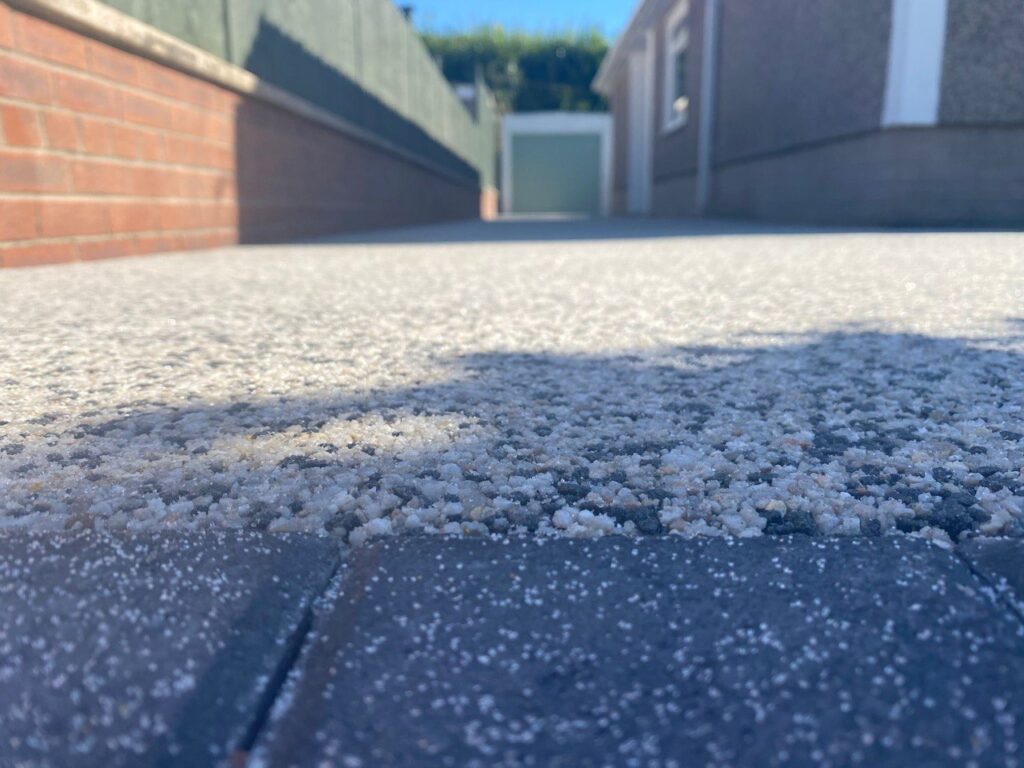
What Is a Resin-Bound Driveway and How Is It Constructed?
Resin-bound driveways have become a popular choice for homeowners looking for a smooth, contemporary surface that combines an attractive appearance with everyday practicality. Unlike surfaces made from individual paving units, resin-bound surfacing creates a continuous finish using carefully selected aggregate mixed with resin before being applied to a prepared base.
For homeowners in Haverhill, Suffolk, understanding how a resin-bound driveway is constructed is particularly useful when considering a new or replacement driveway. Although the finished surface may look relatively simple, its long-term performance depends heavily on preparation, the condition of the underlying base and the quality of the installation.
What Exactly Is a Resin-Bound Driveway?
A resin-bound driveway is created by mixing decorative aggregate with a suitable resin so that every stone becomes coated. The mixture is then laid onto a prepared surface and carefully finished to create an even, bonded layer.
Once cured, the individual stones remain securely held together while retaining the appearance and texture of natural aggregate.
This creates a driveway with a distinctive finish that can suit both traditional and more contemporary properties.
The main characteristics of resin-bound surfacing include:
- A smooth and consistent appearance
- A wide choice of aggregate colours and combinations
- No loose surface stones under normal use
- The ability to create defined borders and design details
- A relatively seamless finished surface
- Good suitability for driveways, paths and other outdoor areas when correctly constructed
However, the resin layer itself is only one part of a successful driveway.
Resin Bound and Resin Bonded Are Not the Same
Although the names sound similar, resin-bound and resin-bonded surfacing use different installation methods.
With resin-bound surfacing, the aggregate and resin are thoroughly mixed together before being laid.
Resin-bonded surfacing involves applying resin to a surface and then distributing aggregate over it.
The resulting finishes are different. A resin-bound driveway generally has a smoother, more uniform appearance because the stones form part of the complete mixed layer.
When discussing a new driveway, it is therefore important to establish exactly which type of resin surfacing is being proposed.
Why Is the Base So Important?
One of the most important things to understand about resin-bound driveways is that the decorative resin surface cannot compensate for an unsuitable foundation.
The driveway needs a stable supporting structure beneath it.
If the underlying surface moves, sinks or deteriorates, defects can eventually become visible through the resin layer above.
This means a professional installation should begin with an assessment of the existing site rather than immediately concentrating on aggregate colours and the final appearance.
At Haverhill Driveways, the condition and requirements of the area are important considerations when planning resin driveway installations in Haverhill.
How Is a Resin-Bound Driveway Constructed?
The exact construction process can vary according to the existing site, but a professionally installed resin-bound driveway generally involves several important stages.
1. Assessing the Existing Driveway or Ground
Before work begins, the existing area needs to be examined.
If there is already a driveway present, its condition helps determine what preparation will be required.
An existing surface showing significant movement, widespread cracking or sinking should not simply be covered without investigating why those problems have developed.
The assessment also provides an opportunity to consider:
- Existing ground conditions
- Finished driveway levels
- Access requirements
- Drainage
- Edges and boundaries
- Connections with paths or other surfaces
- How vehicles will use the driveway
Good planning at this stage helps prevent avoidable problems later.
2. Preparing the Ground
Where a new supporting construction is required, the site needs to be prepared appropriately.
This is one of the most important stages of the complete installation because everything above relies on the stability of the groundwork.
Unsuitable or unstable material may need attention before the supporting layers are created.
The objective is to establish a sound foundation capable of supporting the driveway under regular vehicle use.
3. Creating a Stable Sub-Base
The sub-base distributes loads and provides structural support beneath the finished driveway.
Correct installation and compaction are essential.
If the sub-base contains weak or inconsistently compacted areas, settlement may occur after the driveway begins receiving regular traffic. This can potentially result in dips, movement or other defects at surface level.
Although homeowners will never see this layer after completion, it is one of the most important parts of a professionally constructed driveway.
4. Establishing the Correct Levels
Before the resin-bound surface is installed, the driveway needs appropriate levels.
Levels influence how the finished area connects with surrounding features and how water behaves across the surface.
Careful setting out can help create appropriate transitions around:
- Entrances
- Paths
- Garage areas
- Garden boundaries
- Edging
- Existing hard landscaping
Getting these details correct before surfacing produces a much more considered final installation.
5. Planning Drainage
Water management should be considered during the initial design rather than after the driveway has been completed.
One of the useful characteristics of many correctly constructed resin-bound systems is that the finished surface can allow water to pass through its interconnected voids.
However, the performance of the complete driveway still depends on what lies beneath the resin and how the overall installation has been designed.
Simply choosing a resin-bound finish does not mean that the supporting construction or drainage considerations can be ignored.
The complete driveway needs to work as a system.
6. Installing Suitable Edging
Edges help define and contain the resin-bound surface.
They can also make an important contribution to the overall design.
Depending on the intended appearance, edging can create a subtle boundary or a contrasting feature around the driveway.
Professional setting out ensures these edges are positioned correctly before the resin mixture is installed. This creates clear lines and helps the finished driveway integrate with surrounding landscaping.
7. Preparing the Resin and Aggregate Mixture
Once the supporting surface is ready, the resin-bound material can be prepared.
The selected aggregate is mixed thoroughly with the resin to create an even coating across the stones.
Consistency is particularly important during this stage.
The materials need to be prepared and handled correctly so that adjoining batches form a uniform finished surface rather than visibly different areas.
This is one reason resin-bound installation benefits from an experienced team working to an organised process.
8. Laying the Resin-Bound Surface
The mixed material is placed onto the prepared base and carefully spread to the required depth.
The installer works the material across the area, ensuring consistent coverage while maintaining the intended levels.
Unlike block paving, where individual units are positioned one at a time, resin-bound surfacing needs to be worked as a continuous installation.
Good organisation is therefore essential, particularly across larger driveway areas.
9. Hand Finishing the Surface
Once the mixture has been distributed, it is carefully finished to create the characteristic smooth resin-bound appearance.
This stage requires attention to:
- Surface consistency
- Finished levels
- Edges
- Corners
- Transitions
- Connections between working areas
The quality of this finishing work has a significant influence on the final appearance.
A professionally laid resin driveway should look deliberately constructed rather than simply spread across the existing area.
10. Allowing the Surface to Cure
After installation, the resin needs sufficient time to cure before the driveway is put into normal use.
The surface should not be subjected to traffic prematurely.
Allowing the material to cure correctly helps ensure that the aggregate and resin form the intended bonded finish before regular vehicle loading begins.
Can Resin Bound Be Installed Over an Existing Driveway?
In some situations, an existing surface may provide a suitable base for resin-bound surfacing, but this should never be assumed.
Its condition needs to be assessed first.
If an existing driveway is stable, appropriately constructed and suitable for the proposed system, retaining it may sometimes be possible.
However, laying resin over a surface containing significant structural defects can simply conceal those problems temporarily.
Particular attention should be given to existing:
- Cracks
- Depressions
- Loose areas
- Movement
- Uneven sections
- Drainage problems
The cause of these defects should be understood before deciding how the new driveway should be constructed.
What Makes Resin Bound Attractive for Driveways?
One of the biggest attractions of resin-bound surfacing is its design flexibility.
Different aggregates can create finishes ranging from subtle and understated to more distinctive combinations.
The continuous surface can also work particularly well around properties where homeowners want to avoid numerous visible joints.
Borders and contrasting details can be incorporated to provide additional definition without making the design overly complicated.
For many properties in Haverhill, this provides an opportunity to create a driveway that feels properly integrated with the exterior of the home.
Is a Resin-Bound Driveway Suitable for Regular Vehicle Use?
A properly designed and constructed resin-bound driveway can provide a practical surface for everyday domestic vehicle use.
However, performance depends on the complete construction.
A high-quality resin layer cannot make up for unstable groundwork or inadequate support beneath it.
This is why vehicle use should be considered during the planning stage. The driveway needs to be constructed for what will actually happen on it rather than simply designed around its appearance.
Why Professional Installation Makes a Difference
Resin-bound surfacing requires several stages to work together successfully.
A professional installer needs to consider:
- The existing site
- Ground preparation
- Supporting construction
- Surface suitability
- Levels and falls
- Drainage
- Edging
- Material preparation
- Consistent laying
- Final finishing
Mistakes at the preparation stage may not become visible immediately. The driveway can initially look excellent while weaknesses underneath gradually develop into surface problems.
Professional installation therefore adds value by concentrating on the entire construction rather than only the decorative resin finish.
A Good Resin Driveway Begins Below the Surface
When homeowners choose a resin-bound driveway, it is understandable that much of the initial attention goes towards aggregate colours and the appearance of the finished surface.
Those choices are important, but the hidden construction deserves equal attention.
The strongest installations begin with proper assessment and preparation. Once a suitable foundation has been established, the resin-bound layer can provide the attractive final finish homeowners actually see.
This combination of sound groundwork and careful surfacing is what creates a professionally constructed driveway.
Resin-Bound Driveways in Haverhill
At Haverhill Driveways, we provide professional driveway installation services throughout Haverhill, Suffolk, including resin-bound surfacing.
Every driveway needs to be considered according to its existing condition, intended use and surroundings. Whether the project involves replacing an older driveway or creating a new surface, careful preparation helps ensure that the finished resin driveway has suitable support beneath it.
The objective is to create a driveway that combines an attractive finish with practical construction appropriate for regular everyday use.
Conclusion
A resin-bound driveway is created by mixing decorative aggregate with resin before laying and finishing the mixture as a continuous surface. The result can provide a smart, modern and highly adaptable appearance with numerous options for colours, borders and design details.
However, the resin itself is only the final visible stage of the installation. Ground preparation, a stable supporting structure, correct levels, appropriate drainage and careful workmanship all play an essential role in how the completed driveway performs.
For homeowners in Haverhill, Suffolk, Haverhill Driveways provides professional resin-bound driveway installation and other driveway surfacing services. If you are considering a new or replacement resin driveway, contact us to discuss the area and determine the most appropriate approach for creating a well-prepared, professionally finished surface.
Call us on: 01440 840 590
Click here to find out more about Haverhill Driveways
Click here to complete our contact form and see how we can help with your driveway needs.